
The Cube is a project I worked on in uni, where we worked on a design concept for an interactive media installation in Lake Macquarie’s Multi-Arts Pavilion, mima. The process required us to take a human-centred design approach using research and concept prototyping.
Team
Max Heytman | Felix Yan | Yirong Zha
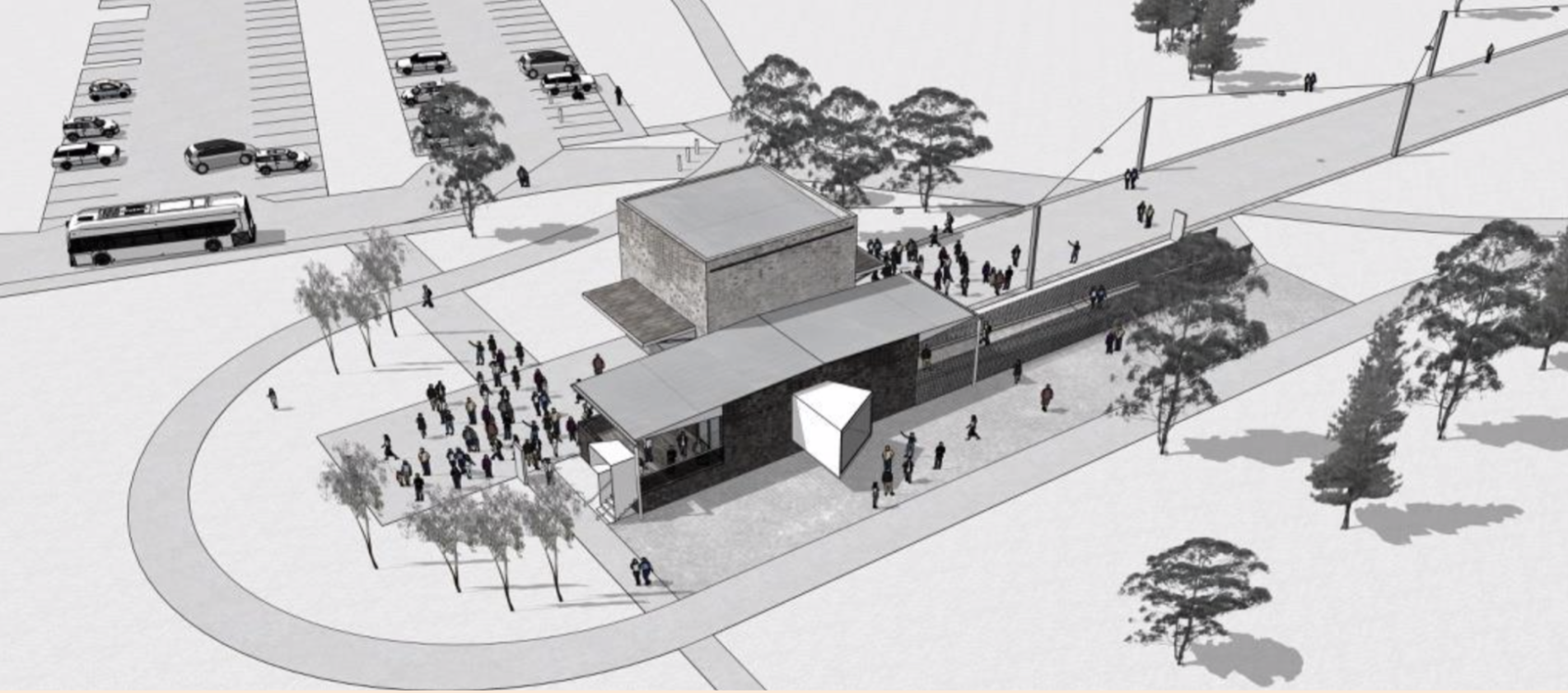
Multi-arts Pavilion Lake Macquarie
Client
My roles
Ideation | Editing & Presentation |Research| Visual Design
Deliverables
Background Research | Low-fidelity installation | User testing
Scope Review
The Cube is a physical space in the Multi-Arts Pavilion (MAP), with exhibits by artists in residence.
The Cube supports 3 levels of interaction that we were expected to consider in our concepts -
a passive mode, individual interaction and group interactions.
To begin the project, we looked at examples of interactive physical spaces as inspiration before we started ideating. I chose to explore spaces that I had previously visited, choosing exhibits at TeamLab Singapore and TeamLab Tokyo.
Using my sketched diagrams,
I was able to explain how the
levels of interaction worked
and how the projects
immersed audiences.

Each of the projects inspired
how we approached interaction in developing our concept.

I explored the themes that these projects explored and the impacts that each of they had on their audiences.

Ideation
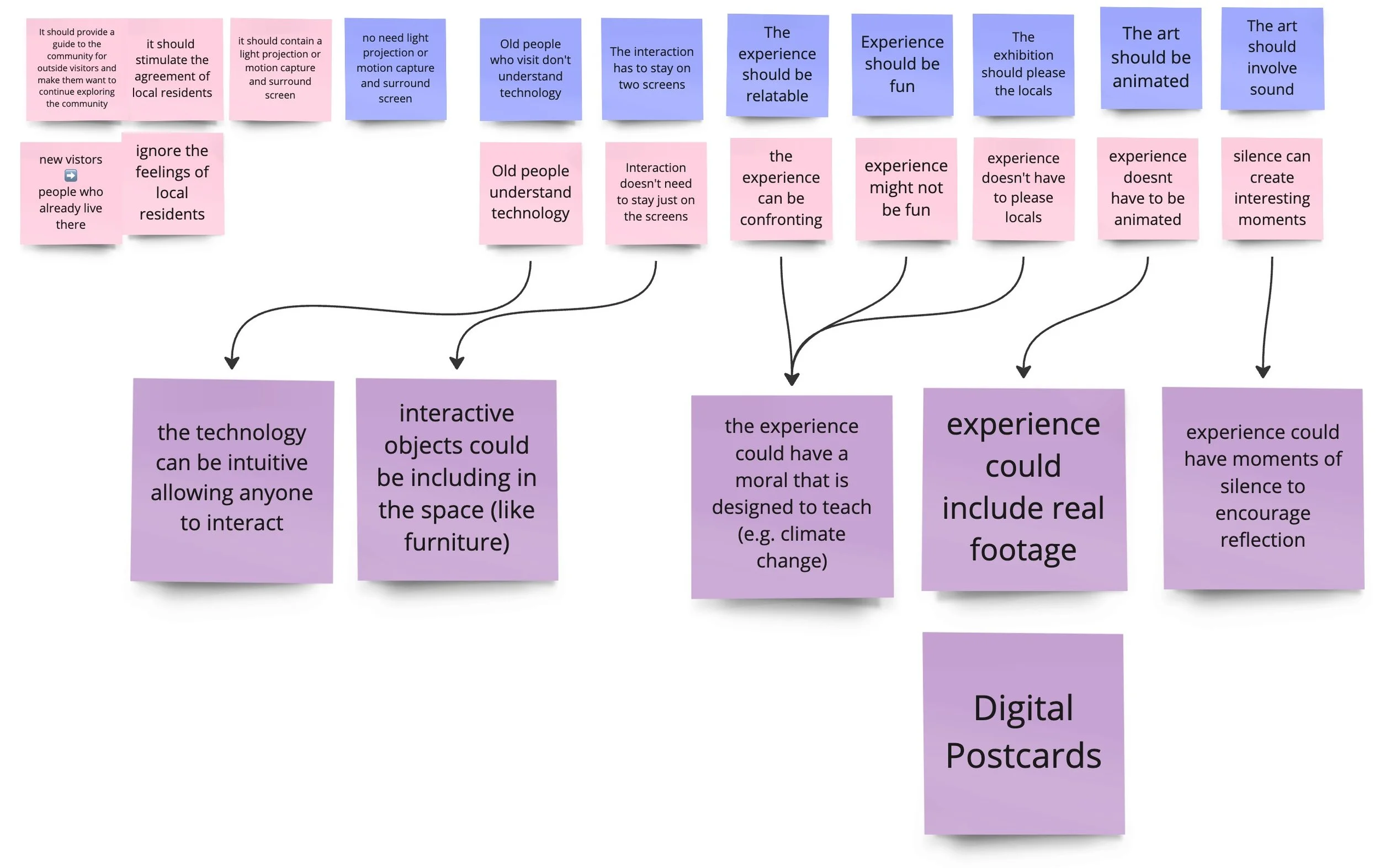
When approaching our design brief, our group used new creative thinking methodologies, including ‘worst possible idea’, ‘brainwriting’, and ‘reversal of assumptions’. These methods helped us form some preliminary ideas supported by diagrams and storyboards.
In this method, we individually wrote down our assumptions about the project, the space and the audience. For example, the experience should be fun and engaging. After making our assumptions, we explore an alternative - instead of assuming the experience has to be fun and engaging, maybe the experience could be confronting and challenge our perspective.
Reversal of assumptions
For brainwriting, we individually wrote down simple ideas for the project in 20-minute sessions. Then, moving on to the next session, we handed the ideas along to the next person to expand on. From this experience we knew that we wanted to explore the identity of Lake Macquarie and its natural landscape.
Brainwriting
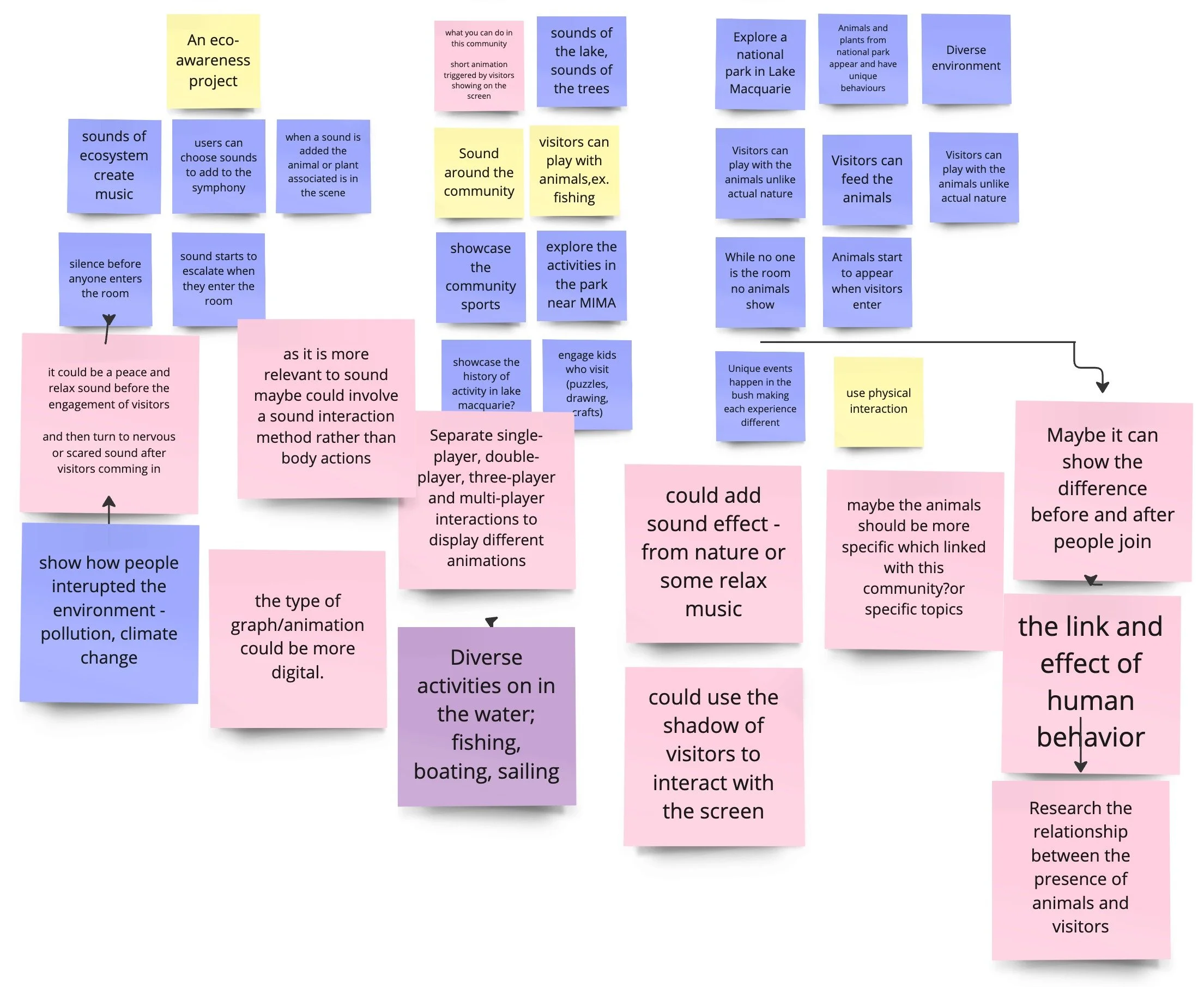
Worst possible idea
The worst possible idea method allowed us to explore every idea and discover what makes a good idea. We used this method to avoid pitfalls when developing our idea further.

Prototypes


Testing and Iteration

User testing surfaced a key challenge: feasibility. Early mockups struggled to convincingly simulate real-time environmental change within the constraints of a physical installation. Rather than abandon the concept, we adapted our approach, moving to pre-rendered video sequences to represent each state of the landscape. This let us preserve the emotional impact of the idea, watching the land shift from harm to repair, while working within a realistic build.
Final Concept Video
The Concept
The final concept centred on a simple but confronting idea: visitors would see their own impact on the landscape reflected back at them, then be invited to work together to repair it. The installation moved between three states, showing the land thriving without human intervention, deteriorating under careless intervention, and recovering through collective, considered action.
This let us design for all three interaction modes the brief required. In passive mode, the landscape would shift on its own, prompting reflection. In individual mode, a visitor's actions would visibly shape the land in real time. In group mode, multiple visitors would need to coordinate to restore balance, turning the experience into a shared act of repair rather than a solitary one.